
HC #3: How We Rescued Our Relationship After 25 Years!
8 steps that boosted our communication and connection

Note: our story is about a romantic relationship, but the steps apply to rehabilitating any partnership: work colleagues, relatives, children.
My husband and I had been married for 25 years…and so many things that had glued us together were gone.
Running our business, taking care of the house and garden, going to the same spiritual community – nope!
Our last creative project had ended in bitter disappointment 18 months earlier.
And I was just done.
I couldn’t handle the silence, his monofocus on the computer, and above all, his consistent, insistent “I’m fine” when it was obvious everything was not fine.
I’d brought it up in March, and again in August, again in September – with no response.
So in November, I finally said, “I can’t keep being married to you like this.”
It was the day before our 25th wedding anniversary.
In this article
Getting his attention
Making it a shared problem
Starting small
Not demanding perfection
I offered to change, too
Getting outside support
Lean on what you have
Celebrate the wins!
How it all worked out
They say that every long-term relationship goes through this. Kids are out of the house. Friends and hobbies evolve. Things that drew you together don’t always last.
But when that happened to me, I wasn’t prepared for the fear: to say something and risk it all or stay silent and suffer? I wanted to keep my relationship if I could, but I couldn’t stay married to somebody who wouldn’t talk to me.
This isn’t the story of how we got into this state because I think many couples have their own.
It’s the story of what we did to get out of it.
Getting his attention
Steve was pissed when I finally “played the divorce card.”
I understood.
It seems he hadn’t noticed that I’d brought up our difficulties in March, August, and September, so he accused me of “springing this on him.”
I get that it’s tough to have your wife of 25 years suddenly use the D-word, something we’d avoided through every other spat, trial, and dust up thus far.
But I knew that I couldn’t let him keep going this way…when he didn’t seem to realize how bad it was for me. Steve really values our marriage. His own parents split up when he was little, and more than anything, he wants a family that stays together.
STEVE’S SIDE: I was so angry about how our creative project didn’t succeed the way I had hoped, but I didn’t know how to express that. It felt like my options were either shut down or blow up. And I knew Robin had problems with my anger, so “shut down” felt like the better option. I was so busy protecting her I didn’t realize I was shutting her out.

Making it a shared problem
I didn’t want to take his anger personally. So I said, “I totally get it. Let’s talk about this over the next couple of weeks.”
Creating a window to let emotions die down took pressure off…and we went out to lunch for our 25th anniversary the next day!
The negative energies were snarky: “Does it really make sense to go out for lunch to celebrate your anniversary even when you’re not sure if this marriage is going to continue?”
And I said emphatically “Yes! We’re not giving in to shame or fear just because we’re having this challenge.”
I used “we“ language: “How can we create new patterns?”
Starting small
I tried to give Steve a single clear action step.
I didn’t say, “You better get your act together,” “your energy is off,” or “you don’t support me” – those were too vague. How was he supposed to fix that when he hadn’t even realized there was a problem?
Instead, I picked something very small and simple: I need you to talk to me.
“When I start a conversation, I need you to ask me some questions and act interested so we can keep talking” (btw, it took 6 months for him to get good at this – if your partner is struggling, don’t underestimate how much time and support they might need to change.)
“When I ask how you are doing, I need more than a two-word answer. Because I don’t want to be married to somebody who doesn’t talk to me.”
A simple, reasonable request meant the negative energies couldn’t blame me for being difficult or make it about me.
Most importantly, it was something I could remind him to do when we were together. No leaving him to fail on his own and blaming him afterwards (This is so crucial! Don’t set up an unlikely or impossible hurdle and blame your partner when they can’t clear it…).
As long as we could create progress together, I was happy.
STEVE’S SIDE: At first, I had a whole bunch of reasons I couldn’t ask her questions about what she was doing. I didn’t know what to ask. If I just stayed silent, she would tell me anyway, right? Then I realized that the negative energies were keeping me from interacting with her. So even though it was hard, I gradually started to ask. Now I am a lot better at it.

Don’t demand perfection
I said to Steve, “I’m not saying this because you’re struggling or depressed.But I want to see that you’re getting better in this one area: talking to me.”
I didn’t want my ask to be overwhelming. I knew he would have to find the strength to make changes.
STEVE’S SIDE: Sometimes I had these thoughts like “I can’t be what she wants.” But I gradually realized that, actually, her requests were pretty reasonable. And she was patient with me while I got better at them.
I offered to change, too
I didn’t want him to feel like I thought I was doing everything right and change was all on him, so I said, “How can I change for you?”
Initially, he didn’t have any ideas (no wonder since he didn’t even realize we were struggling!) but I didn’t push. I just said, “Whenever you have a thought, let me know” …and then I got busy working on my own thoughts about how I needed to be different.
Steve is very tender-hearted. I didn’t want to create an opening for negative energies to pile guilt or shame on him, like it was all his fault and he’d messed up because he was in a tough mental spot and didn’t realize how it was affecting his partner.
That could happen to any of us (and, in fact, he’d borne up under my mental health struggle three years earlier…and another one 20 years before that!)
Getting outside support
Steve and I are fortunate he has a therapist he likes and she was willing to hear my input.
In fact, she turned out to be grateful because she’d been struggling with Steve’s “I’m fine” response, too.
She saw us together for a while, focusing on how to create better patterns between us.
I don’t think it has to be a therapist. A community group, a family elder, a wise mentor or a coach, even an astrologer who does couples readings — like me — can give support.
But I think it’s important that it’s not just the two of you trying to fix a pattern that you’ve been building for 25 years (or however long).
It’s nice to have a third party to take the pressure off and suggest a different perspective. Neither one of you always has to be the “bad guy,” pointing out problems.
STEVE’S SIDE: I realized that astrologically, a lot of my focus is on what I am feeling. So it was good to have someone outside our marriage help me understand Robin’s side.

Lean on what you have
I didn’t want a pall to fall over our relationship. I didn’t want my divorce ultimatum to stop us from enjoying each other or make us feel guilty and sad…that’s not my road to healing!
So we made it a point to keep doing the things we enjoy together: taking walks in nature, cooking, playing card games, watching an hour of competition baking shows every night. Whether our partnership ultimately survived, I didn’t want it to fail because we’d forgotten about the happy habits we’d built for 25 years.
We figured we need a good, positive foundation to withstand the stresses of growth.
Celebrate the wins!
Even though the request that my partner should ask me a couple of questions about what I was doing seemed simple enough to me, I had to recognize that it wasn’t for Steve.
He’s neurodivergent, and once he’s locked on his own project, it’s not easy for him to switch gears and suddenly start thinking about mine.
So I pulled on my coaching hat and brought out my celebration skills, honed from decades working with teenagers on SAT math problems.
If Steve asked me even one tiny question, I noted what a great job he had done (even if it felt silly to make such a big fuss). I lavished him with praise for remembering what I had asked…and then actually doing it. I didn’t give in to the temptation to be dismissive if his efforts seemed small.
I wanted him to have a great experience talking to me. Big hugs and kisses!
We continued to make plans as though we were going to stay together, deciding on the next locations in our nomadic journey, continuing to talk about our future.
Neither one of us wanted to separate. We just needed to create new patterns that supported a healthy relationship.
STEVE’S SIDE: Sometimes Robin’s praise makes me feel uncomfortable. I didn’t grow up being the center of attention. But it does feel good when she notices my hard work. I’m glad she keeps going through my “aw shucks” response.

How it all worked out
Two years later, I think our relationship is better than ever.
Mainly because we communicate.
I am way more honest – I’m respectful, but I don’t back down even if Steve’s initial response isn’t encouraging.
Steve has done a great job learning to talk more — He shows interest in what I’m doing and tries to keep the conversation going.
Steve has realized that always saying “I’m fine” doesn’t benefit him or me — I thank his therapist for reminding him of that.
I no longer fear Steve’s anger — I’m a grown woman, and he is not violent. His anger is not a danger to me (I have to remind myself of that because of childhood trauma, but it’s a good reminder!)
Steve tries to recognize when he’s retreating into his head — He says things like “I don’t want you to feel like I’m not paying attention to you” or “I would like us to interact now.” This means the world to me.
I’m sharing this story because recently a client in a tough relationship spot said it was helpful.
I hope you can find something that resonates to build your relationships with partners, children, work colleagues, friends, or other relatives.
It’s normal for long relationships to hit rocky spots as people grow and circumstances evolve.
Being honest about that doesn’t mean your relationship is failing. It’s a sign of health. You can work together to build new foundations, habits, and patterns to strengthen your partnership.
STEVE’S SIDE: As the child of divorced parents, I realized that Robin’s ultimatum brought up an old fear: “I don’t leave people. They leave me.”
But eventually I saw that Robin didn’t want to leave. In fact, she was fighting for our relationship. I needed to do that, too. But I still have a tendency to fall back into that shut down/dissociate habit. Robin has had to continue to pull me back into interacting with her. I’m learning to recognize when it’s starting so that it’s not always on her to point it out.
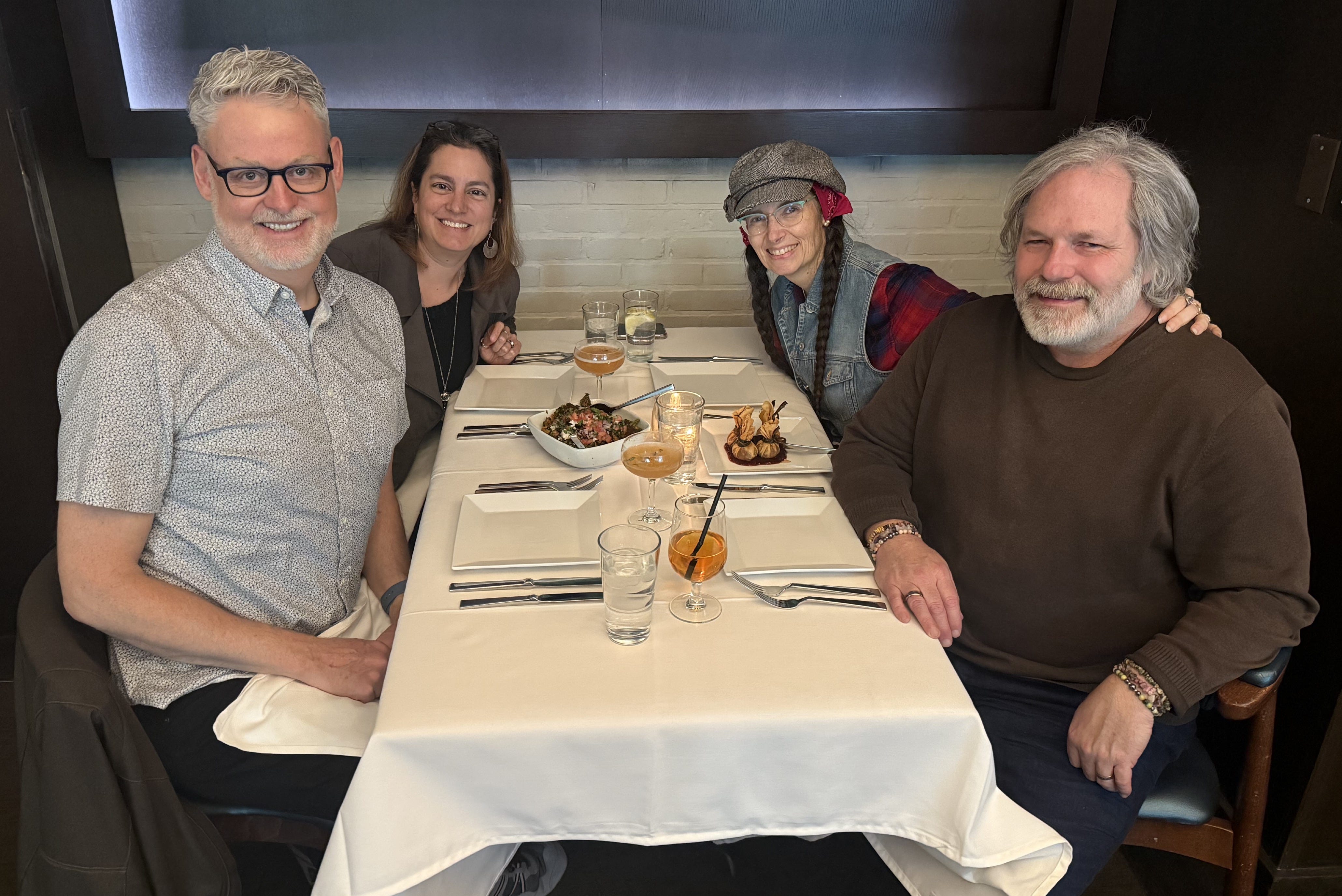
ONE MORE NOTE FROM ROBIN: If you’ve been noticing that Steve’s hair has been getting longer in some of these photos…that’s one more thing he changed for me. Now he’s on his way to the Greg Allman look…
NOTE: Steve was hesitant to share his side because he feels like men sometimes get the lion’s share of the blame in online discourse. So if you leave a comment, please don’t pile on him! Thank you!

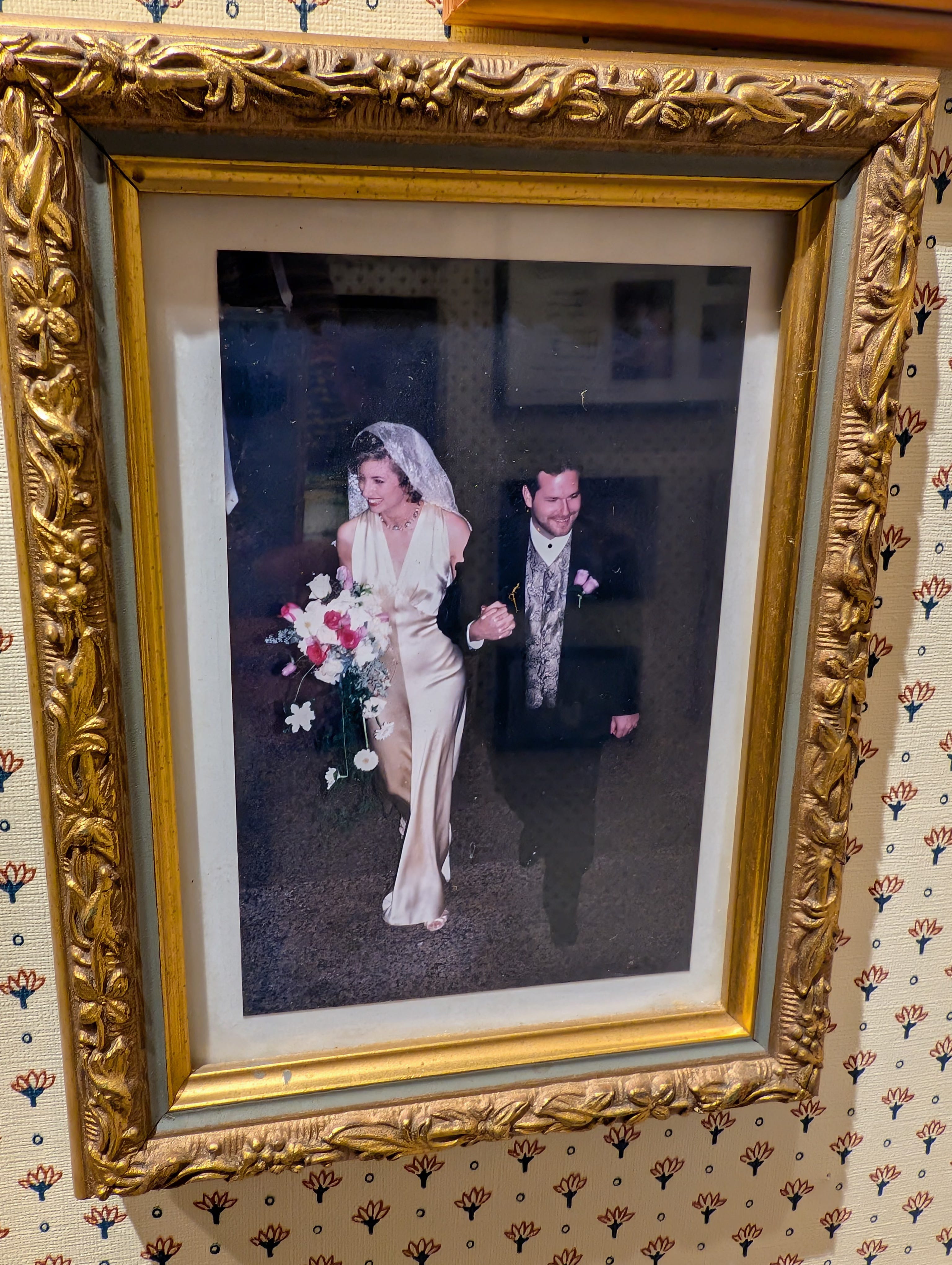
Wow. What a beautiful and brave article. I admire the vulnerability in sharing your story. Marriage is, indeed, something that goes far beyond effort. Love that wedding photo! Wishing you both all the best in your nomadic journey and many amazing years ahead. 🙏❤️
Thank you for sharing this! Having been through similar, I really felt this. I love how the two of you are so creative.